Speak boat: orientation without confusion
On a boat, “left” and “right” change when you turn around. Port, starboard, bow and stern never do. By the end of this lesson you will be able to orient yourself, understand a basic instruction and give one clearly.
- Identify bow, stern, port and starboard from any position.
- Explain ahead and astern without relying on where you are facing.
- Translate a real instruction into the correct onboard action.
Meet the six words that remove ambiguity
Imagine you are standing at the helm and looking toward the pointed end of the boat. The pointed end is normally the bow. Behind you is the stern. The entire left side of the vessel is port; the entire right side is starboard.
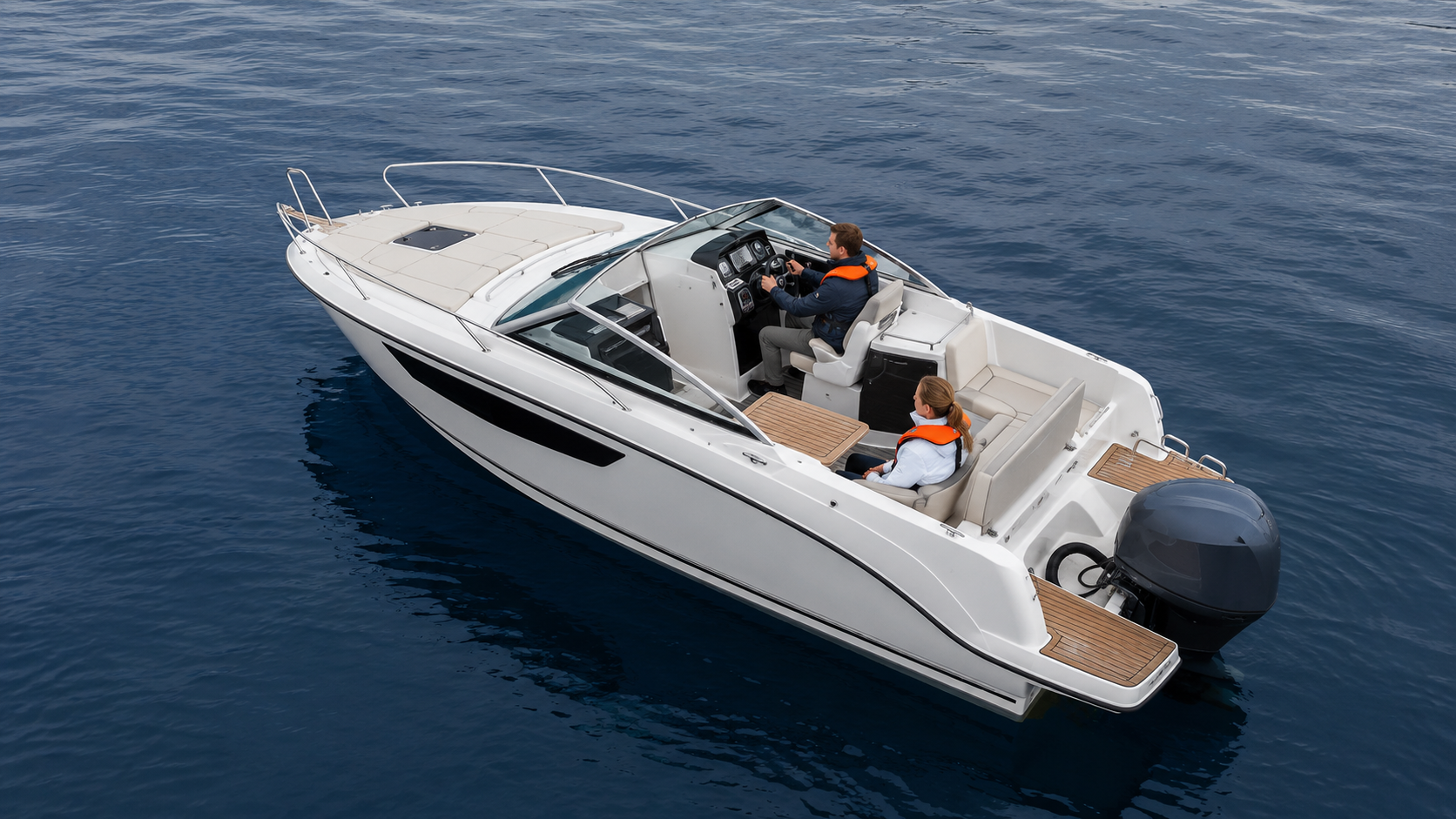 BOW
BOWfrontSTERN
rearPORT
vessel’s leftSTARBOARD
vessel’s right
The forward end. Movement or a view toward the bow is ahead.
The after or rear end. Movement toward or beyond the stern is astern.
The vessel’s left side when facing the bow. Conventionally associated with red.
The vessel’s right side when facing the bow. Conventionally associated with green.
Build two memory anchors
Port and left both have four letters. That connects port to the vessel’s left side. Then starboard is the other side.
Port—the drink—is red. That connects port with the red sidelight; the starboard sidelight is green. You will use this connection again in the navigation-lights lesson.
Turn words into safe actions
“Move the fender aft on the port side.”
- Port side: go to the vessel’s left side when facing the bow.
- Aft: move toward the stern.
- Fender: reposition the protective cushion farther back along that side.
The instruction still means the same thing if you are facing the stern when you hear it.
Check your understanding
Try to answer before opening the explanation. Retrieving an answer strengthens memory more than rereading it.
1. You are facing the stern. Which side of your body is the boat’s port side?
2. Someone says, “Take this line forward on starboard.” Where do you go?
3. Is “reverse” exactly the same as “astern”?
The 60-second onboard orientation drill
On a real boat—or using the photograph above—point to each item without pausing:
- Bow
- Stern
- Port side
- Starboard side
- Ahead
- Astern
Then turn around and repeat. Finally, explain the terms to another person in your own words. If you can teach it simply, you probably understand it.
Directions belong to the boat. Bow and stern establish front and rear; port and starboard establish the vessel’s fixed sides; ahead and astern describe direction. Precise language reduces hesitation when timing matters.