See risk early: lookout and collision basics
A safe skipper does not wait for another boat to feel close. Learn a repeatable scan, assess, act, check cycle that creates time and preserves options.
- Describe a proper lookout using sight, hearing and available information.
- Recognise steady bearing and decreasing range.
- Explain why avoiding action should be early, substantial and checked.
A lookout is a continuous job
Looking straight ahead is not enough. Build a calm 360-degree picture: ahead, each bow, abeam, each quarter and astern. Listen for engines, horns and breaking water. Use radar, AIS and other suitable equipment when available—but never assume a screen replaces eyes and ears.
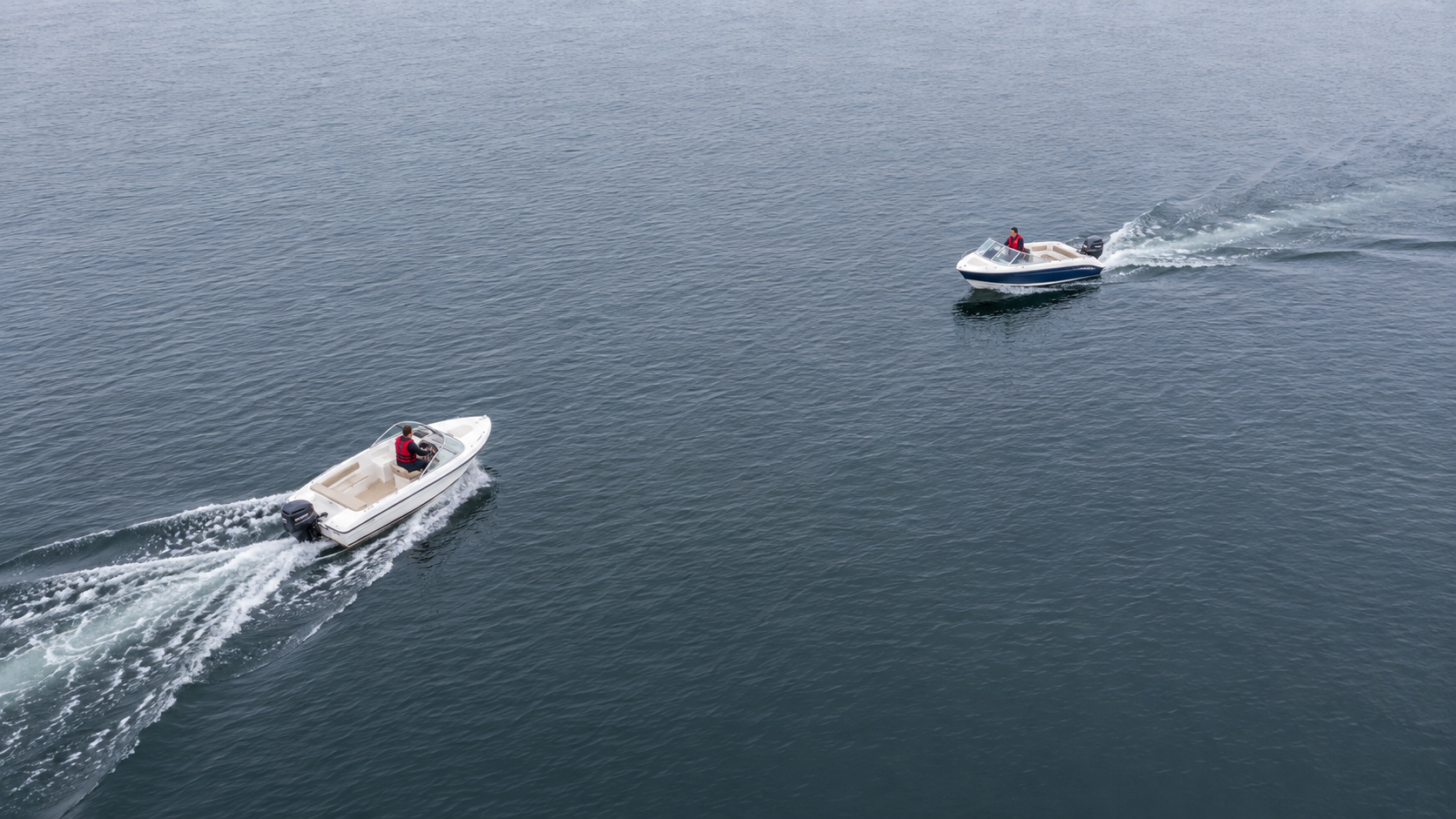
Look and listen all around. Account for blind spots and distractions.
Where is it, how is it moving, and is the range closing?
If action is required, make it positive and in ample time.
Keep observing until the vessel is finally past and clear.
Use the clock-face method
Imagine your bow points to 12 o’clock. A contact at 3 is on the starboard beam, 9 is on the port beam and 6 is astern. Call its position, then compare it again after a short interval.
Turn observation into a decision
A boat stays beside the same windscreen pillar
You check twice. It remains beside the pillar but looks larger. Treat the risk as real, identify the applicable rules and take early, obvious action appropriate to the full situation. Then check that the bearing opens and you will pass at a safe distance.
Check your understanding
1. Why is looking only ahead insufficient?
2. The bearing seems steady but you are uncertain. What now?
3. Why avoid a series of tiny course changes?
The two-minute scan drill
- Name hazards by clock position.
- Choose two contacts and note each bearing.
- Check again after 30–60 seconds.
- Say what information you still need.
Scan, assess, act, check. A proper lookout creates time; early, clear action and continued monitoring turn that time into safety.