Protect life: safety and emergency priorities
Good emergency response begins before departure. A short crew brief, accessible equipment and a practised first response reduce hesitation when seconds matter.
- Deliver a concise pre-departure safety brief.
- State immediate priorities when a person enters the water.
- Give rescuers the position, problem, people and help required.
Keep the person visible and the propeller safe
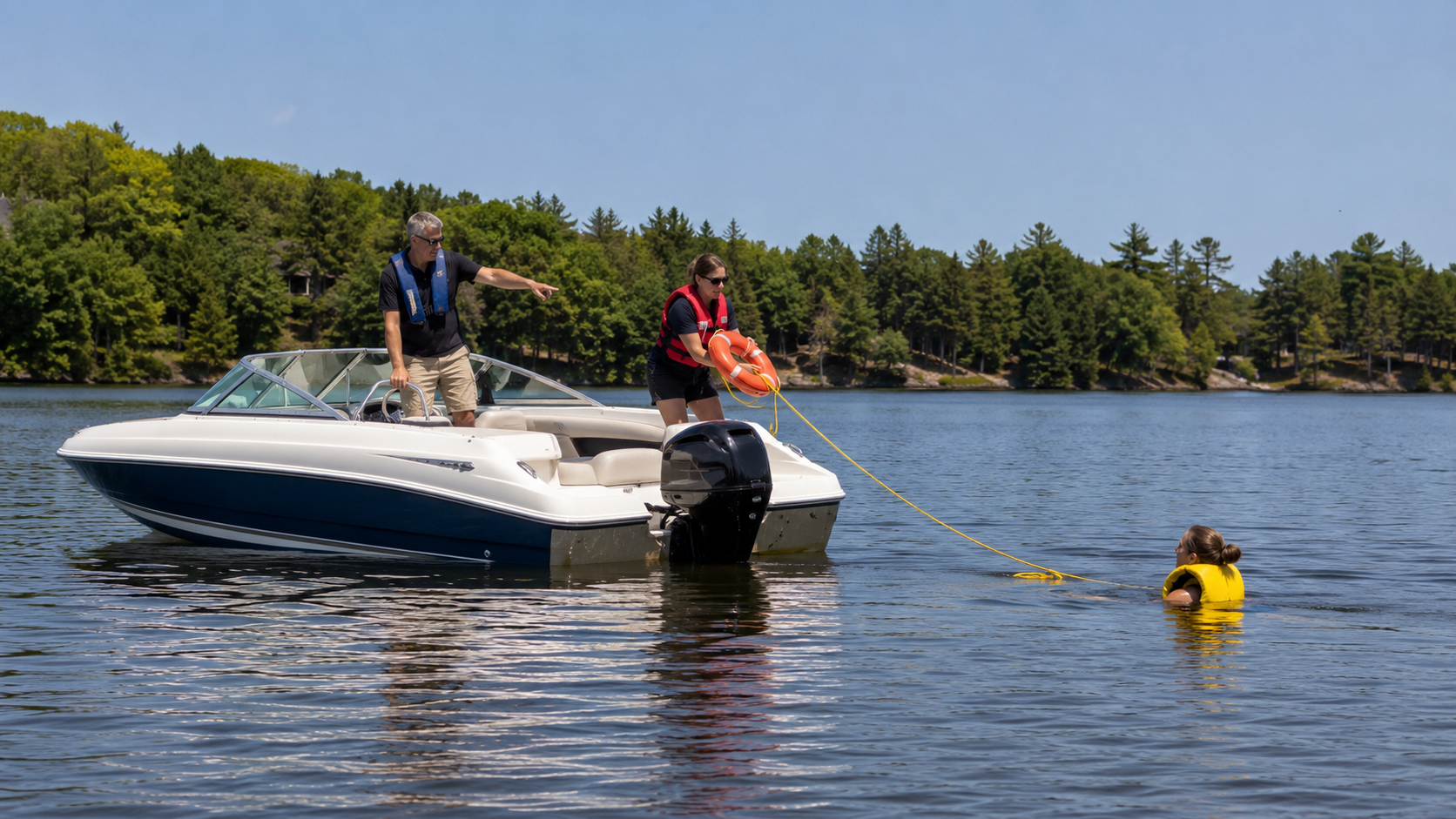
Alert everyone and maintain uninterrupted visual contact.
Put buoyancy near the casualty immediately.
Slow or stop appropriately, mark the position if able, and plan a return.
Keep propellers and rescuers clear of danger; stop propulsion as appropriate before close recovery.
PEOPLE · POSITION · PROBLEM · HELP
Rescuers need usable facts more than a long story. Identify the vessel, give the best position, describe the problem and people affected, then state the assistance required.
Prevention belongs in the response
A guest slips overboard while manoeuvring
Shout, point and throw flotation. Control the boat without losing sight. Raise assistance early if recovery may not be immediate. Plan an approach for wind, current, freeboard and propeller danger. Do not create a second casualty by sending an unprepared person into the water.
Check your understanding
1. What is the first visual-control action?
2. Why neutral or stop propulsion near the casualty?
3. Which facts make the alert useful?
The 90-second crew brief
Point out flotation, stop controls, recovery equipment, fire/first-aid gear, VHF and position display. Ask a guest to show one item back.
Prepare, point, float, control, recover, call. Protect the casualty without creating another emergency.