Decide before departure: weather and checks
A forecast is not permission to go. Combine weather, boat, people and plan—and decide what change would make you shorten, delay or cancel.
- Separate forecast conditions from what you observe.
- Check weather, boat, people and plan.
- Set a clear trigger for turning back.
Look beyond the weather icon
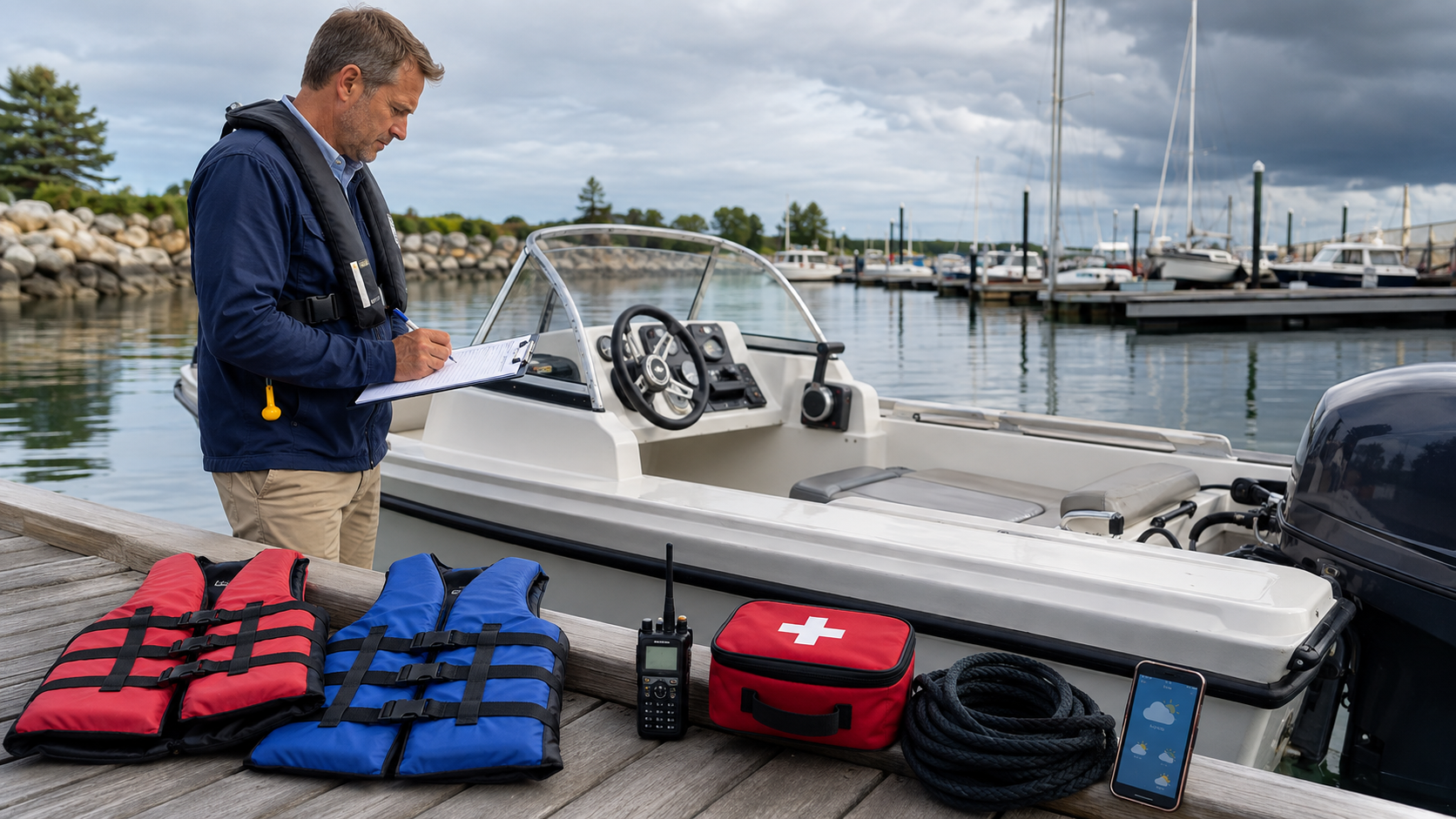
Wind, gusts, sea, visibility, temperature, tide and current.
Fuel/charge, engine, steering, bilge, lights, communications and safety gear.
Experience, fitness, clothing, fatigue and confidence.
Route, hazards, daylight, safe havens, shore contact and alternatives.
Use three decision points
Before leaving: is the full plan within capability? At the harbour entrance: do actual conditions match? During the trip: is the return margin intact?
Set limits while the choice is easy
The departure looks acceptable—but the return does not
The outward leg is sheltered. The return is against building wind and tide and may end after dark. Ask whether this crew can complete the whole plan with margin. Change route, leave earlier, choose a nearer destination or postpone.
Check your understanding
1. Why is departure weather alone incomplete?
2. Name the four check areas.
3. What makes a turn-back trigger useful?
Two-minute departure brief
- State forecast and actual conditions.
- State route, return and alternatives.
- Confirm boat and safety checks.
- Name one change trigger.
Weather, boat, people, plan. Protect the return and preserve decision margin.