Be heard: VHF radio foundations
A good transmission is short, calm and structured. Learn the microphone sequence, message priorities and the essential information that makes a call useful.
- Use listen, think, press, pause, speak, release.
- Distinguish distress, urgency and safety messages.
- Prepare core facts for an emergency transmission.
Use the microphone deliberately
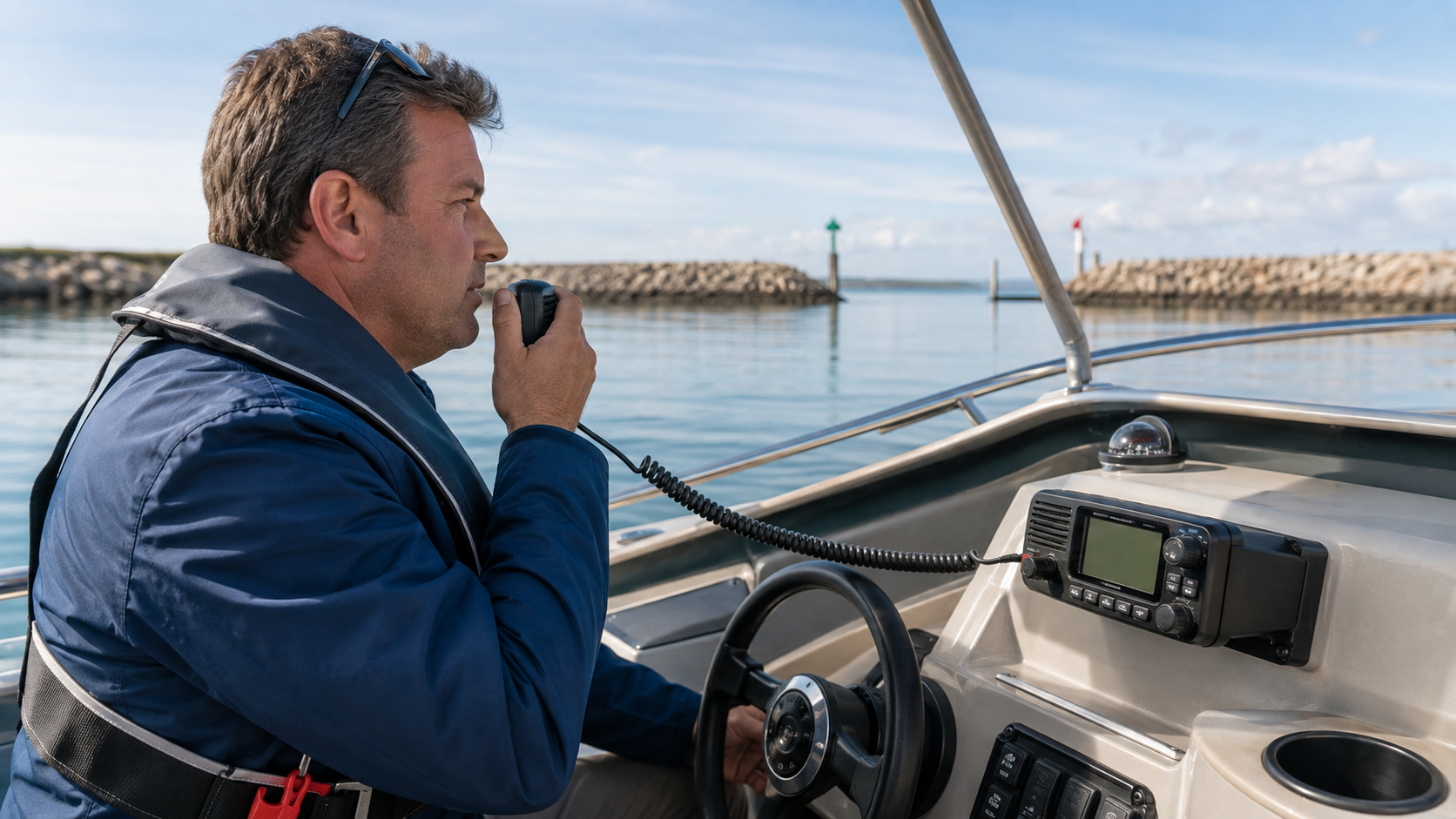
Confirm the channel is not carrying important traffic.
Know who you call and the one request you need.
Pause briefly so the first word is not clipped.
Use a normal clear voice, then release to listen.
Learn the priority ladder
MAYDAY means grave and imminent danger requiring immediate assistance. PAN-PAN introduces an urgent safety message below that threshold. SÉCURITÉ introduces important navigational or meteorological safety information.
Put facts in a predictable order
Call, identify, request
“Harbour Marina, Harbour Marina, this is motor vessel Sea Finch, Sea Finch. Request berth instructions. Over.” Move routine conversation to the locally designated working channel when instructed.
- Identity: vessel name/call sign and MMSI where available.
- Position: latitude/longitude or another unambiguous location.
- Problem: what happened and the immediate danger.
- People: number aboard, injuries and people in water.
- Help: assistance required, description and intentions.
Check your understanding
1. Why pause after pressing push-to-talk?
2. Which word is for grave and imminent danger?
3. What are the five information groups?
The dry microphone drill
With the radio switched off or in a simulator, prepare a routine marina call and a fictional emergency card. Ask someone to write what they heard; clarify missed facts.
Clear thinking makes clear radio. You have completed the six foundation lessons—take the assessment to find your next best topic.